Uganda Airlines Fleet Expansion: A Bold Leap Toward Global Connectivity.
 Atukwase Innocent · · 3 min read
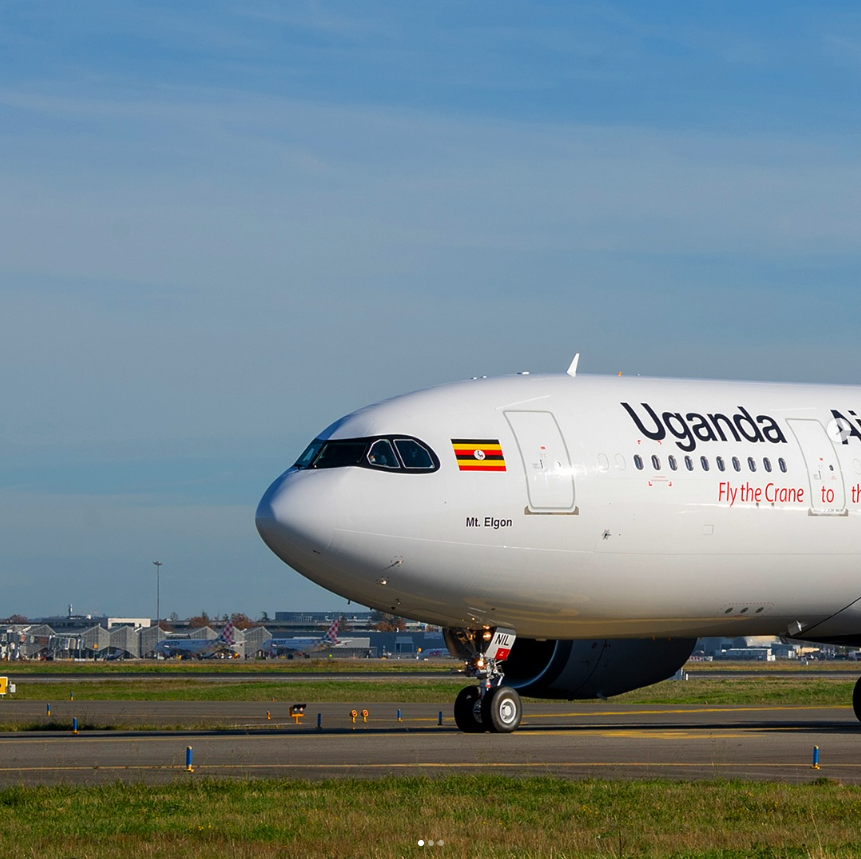
Uganda Airlines, the national carrier of Uganda, is on the cusp of a transformative era. After years of operational challenges stemming from a limited fleet, the airline is set to significantly scale up its capacity through a major government-backed expansion program. This move promises to enhance reliability, open new routes, boost tourism and trade, and position Entebbe International Airport as a stronger regional hub.
The Current Landscape: Challenges and Resilience
As of mid-2026, Uganda Airlines operates a relatively compact fleet consisting primarily of:
- 4 Bombardier CRJ900LR regional jets
- 2 Airbus A330-800neo widebody aircraft for long-haul operations
- Additional leased aircraft, including A320 family jets and occasional widebody support (e.g., from Ethiopian Airlines)
This limited size has led to periodic maintenance-related groundings, flight delays, cancellations, and constrained growth on both regional and international routes. Despite these hurdles, the airline continues to serve key destinations across East Africa, Southern Africa, and select long-haul points like London Gatwick, Mumbai, and Dubai, while actively resuming in-house widebody operations.
The government has consistently demonstrated commitment through capital injections, viewing the airline as a strategic asset for national development, job creation, and economic connectivity.
The Expansion Plan: Details and Funding
In a landmark decision, Uganda's Parliament approved UGX 422.26 billion (approximately USD 113–119 million) in supplementary funding for the 2025/26 fiscal year. This allocation forms the initial push for acquiring up to 10 new aircraft, combining passenger and cargo capabilities from Airbus and Boeing.
Breakdown of Planned Acquisitions:
- Airbus Narrowbody/Medium-Haul: Finalizing orders for four aircraft — two A320-200neo and two A321-200neo. Deliveries are targeted post-2031 due to production backlogs, but interim dry-leases of similar A320/A321 models are expected by late 2025 (with some already in operation via partners like DAT Danish Air Transport).
- Boeing Widebody: Two Boeing 787 Dreamliners (likely -8 or -9 variants) to bolster long-haul capacity, supporting existing routes and new services, including potential flights to China (e.g., Guangzhou) starting in 2026.
- Cargo Freighters: Inclusion of one or more Boeing freighters (such as B737-800SF conversions or larger options like B777F in broader plans) to expand cargo operations and intra-African trade.
Overall ambitions point toward a mixed fleet of up to 10 additional aircraft, potentially growing the total fleet toward 16+ when including current assets and leases. This represents one of the most substantial investments in the airline since its relaunch in 2019.
Strategic Vision and Benefits
The fleet expansion is embedded in a broader 10-year infrastructure and network plan aiming for:
- Up to 32 destinations regionally and internationally.
- Strengthened connectivity to Europe, Asia, the Middle East, and new markets like China.
- Improved operational reliability by reducing dependency on wet-leases.
- Enhanced cargo capacity to support Uganda’s export ambitions (agriculture, perishables, etc.).
- Job creation in aviation, tourism, and related sectors.
By addressing capacity bottlenecks — especially on hot-and-high routes like Johannesburg — the new narrowbodies will offer better performance, more seats, and improved baggage capabilities. The 787s will bring modern efficiency, passenger comfort, and range for long-haul growth.
Timeline and Next Steps
- Short-term (2025–2026): Bridge leases for A320 family aircraft, pre-delivery payments, and progress on Boeing 787 acquisitions. Potential start of China services.
- Medium to Long-term (2027–2031+): New-build deliveries ramp up, full network expansion.
- Additional capital injections (e.g., further allocations reported in 2026) continue to support stabilization.
Exact timelines depend on contract finalizations, financing, and manufacturer schedules. The airline continues negotiations with both Airbus and Boeing.
What This Means for Passengers and Uganda
For travelers, expect:
- More flight frequencies and fewer disruptions.
- Expanded route options and potentially competitive fares as capacity grows.
- A stronger national carrier enhancing Uganda’s image on the global stage.
This expansion signals confidence in Uganda Airlines’ turnaround, with improving revenues and declining losses noted in recent reports. Challenges remain — including maintenance discipline and market competition — but the trajectory is clearly upward.



Comments